75%
Faster onboarding
Reduced from 5m 15s → 1m 17s.

Redesigning a fragmented logistics experience into a scalable, multi-sided marketplace, improving activation, operational efficiency, and revenue generation.

Transform iDlvr into a seamless, self-sustaining logistics platform that reduces friction, accelerates activation, and drives growth through a scalable marketplace experience.
The product was limited by friction across critical touchpoints. Drivers were dropping off during onboarding, customers relied on external workflows, and suppliers lacked tools to manage orders efficiently. Without addressing these issues, the platform couldn’t scale supply, demand, or revenue, making it essential to rethink the experience end-to-end.
At the same time, customers faced friction in creating orders, often relying on external workflows that made the process slower and more confusing.
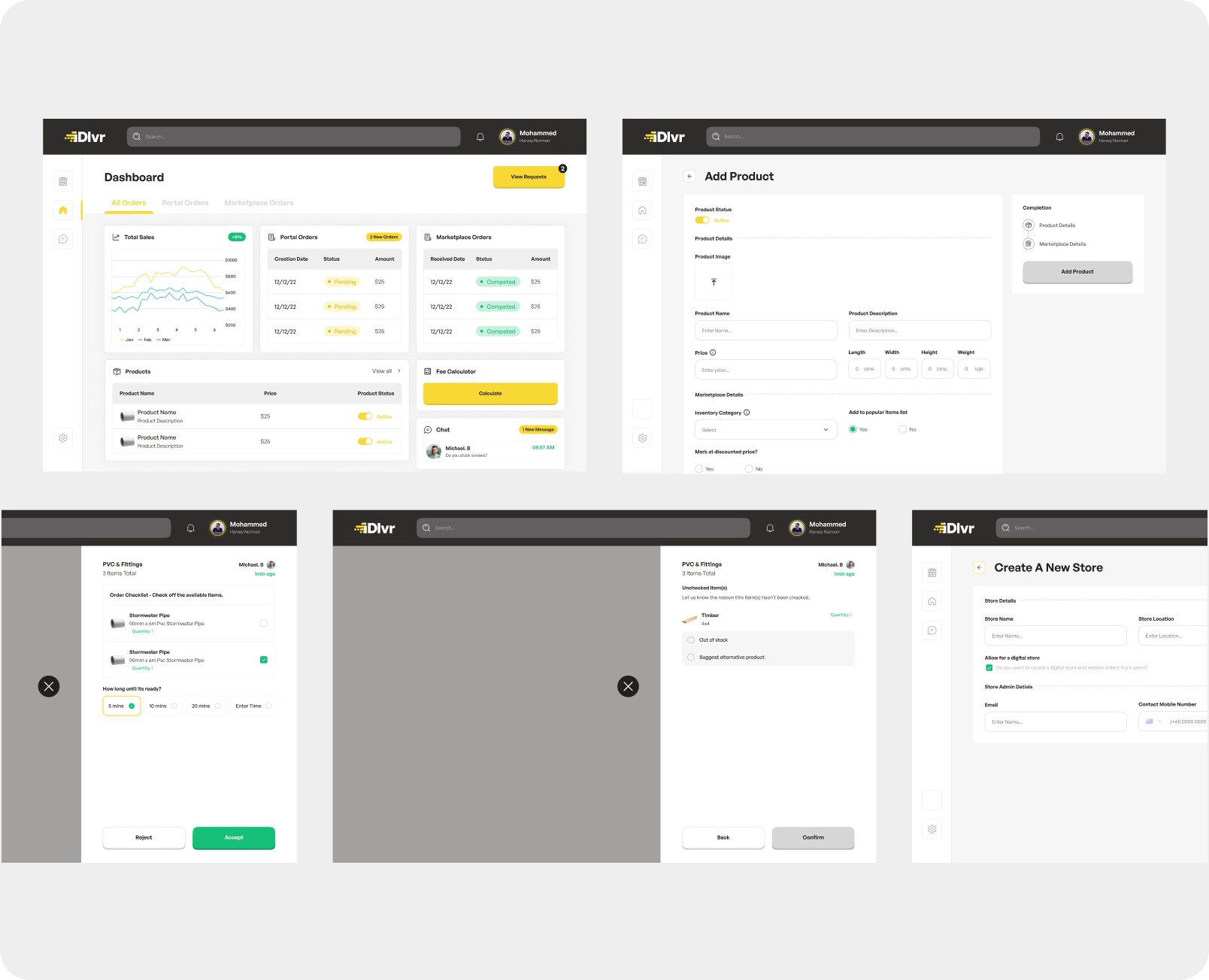
This led to a redesign of the core experience across onboarding, homepage, and ordering alongside the introduction of a marketplace as an additional ordering pathway.
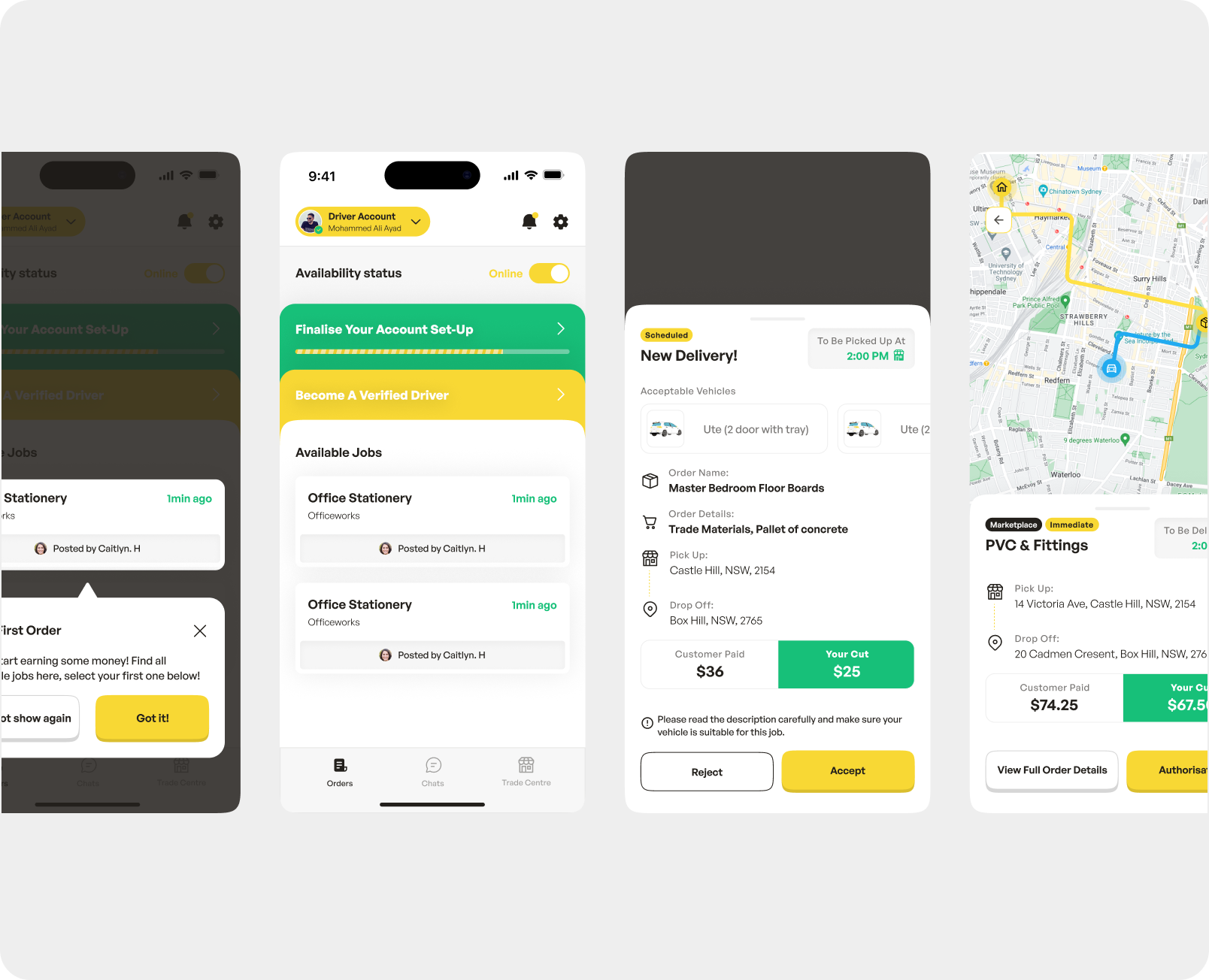
Early insights showed that drivers were dropping off before ever experiencing the value of the platform. Onboarding was slow, and users lacked clarity on what to do once inside the app. To address this, I redesigned onboarding and the homepage as a connected experience, focused on guiding users toward their first meaningful action.
This shifted the experience from a linear setup flow into a guided path toward activation, ensuring users quickly understood how to engage with the platform.
Faster onboarding, improved clarity, and increased confidence in accepting jobs.
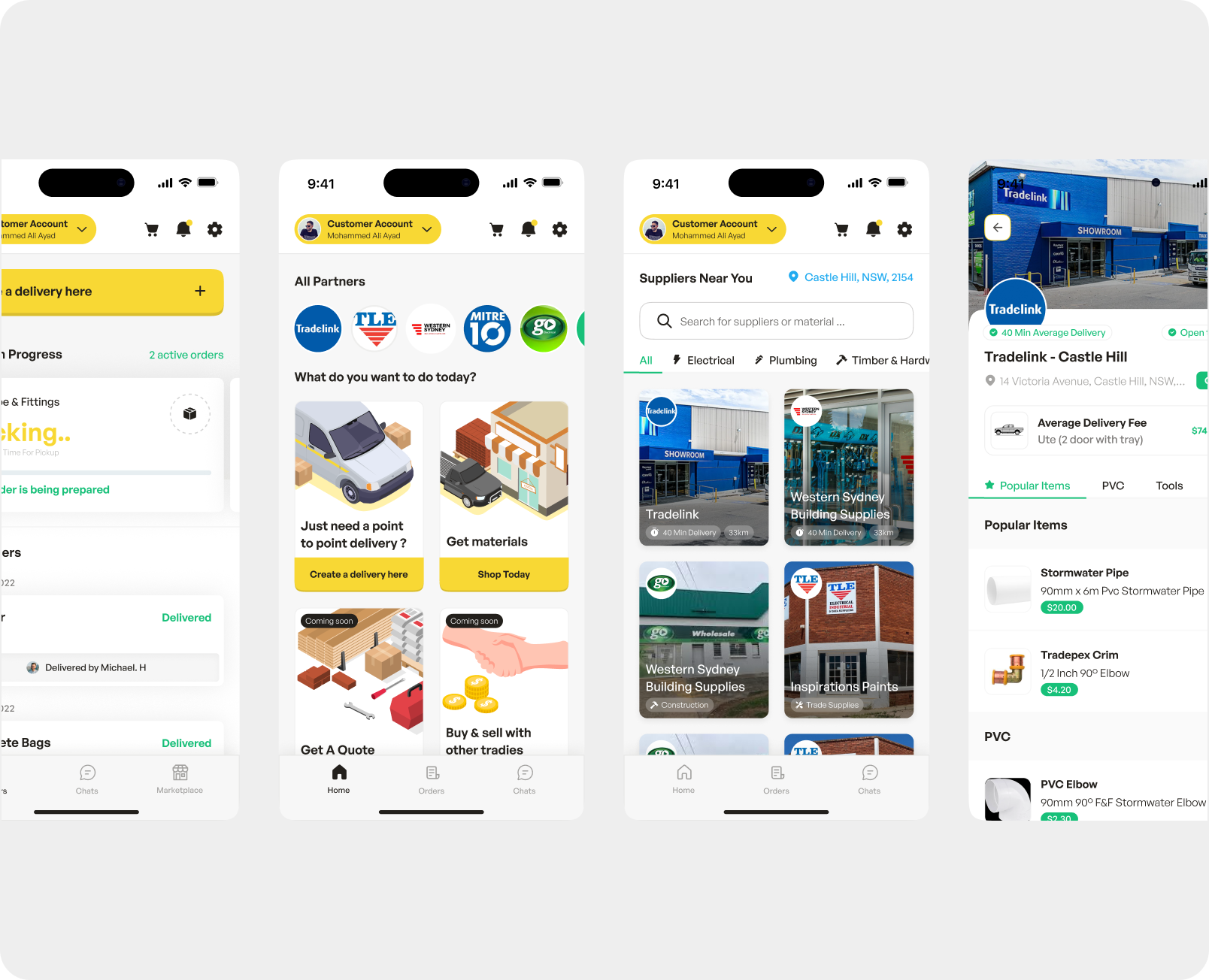
A core issue across both drivers and customers was a lack of visibility — users didn’t know what was available, what state their orders were in, or what to do next. The redesign focused on making the system’s state and available actions immediately clear.
For drivers, this meant better awareness of job opportunities. For customers, it simplified how they create and track orders.
Reduced confusion, faster decision-making, and improved task completion across both sides of the platform.
To address the reliance on external workflows, I introduced a marketplace as an additional pathway for order creation, while redesigning the underlying logistics system to support it.
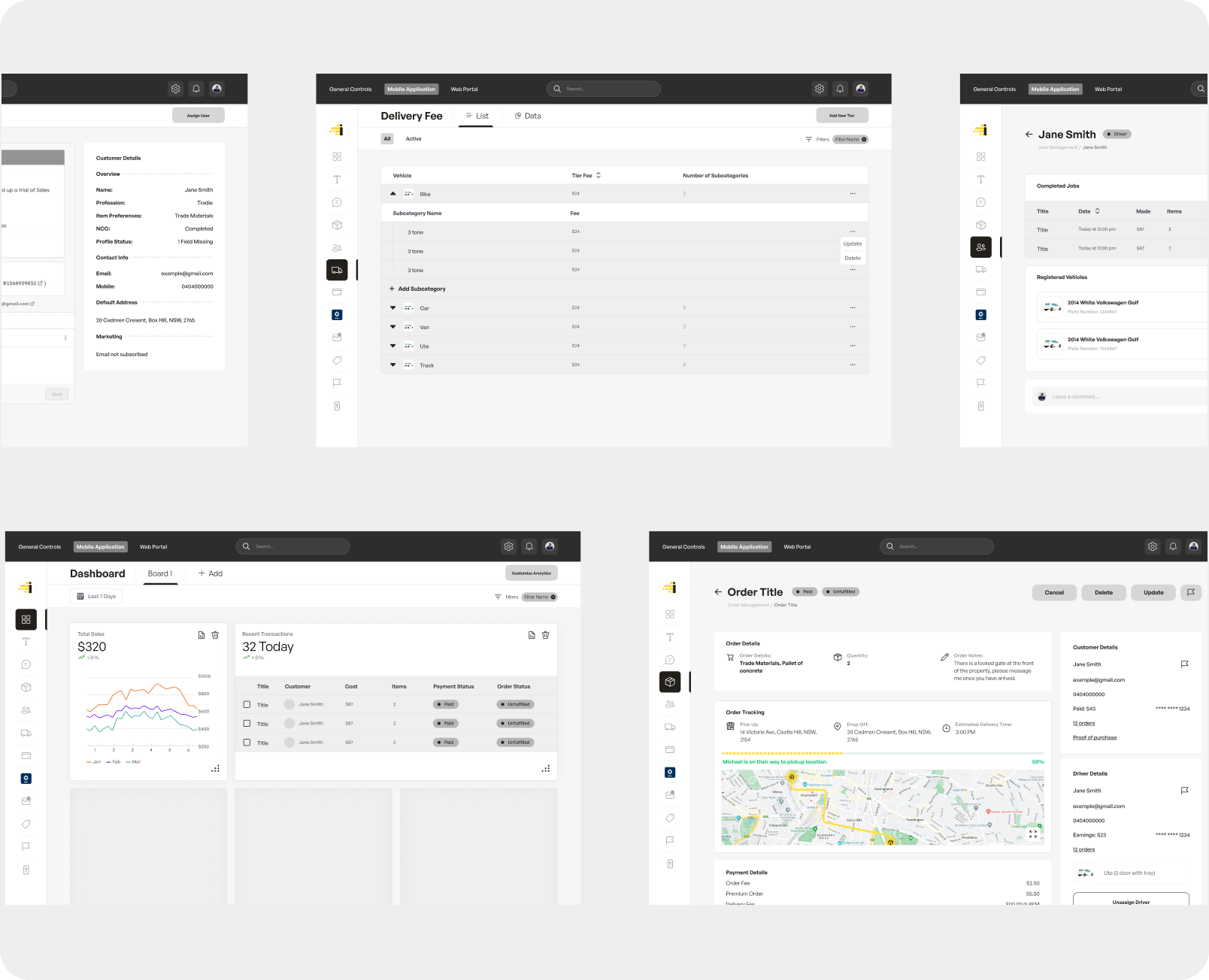
To support this, I designed a broader operational system that included a supplier web portal to manage inventory and fulfilment.
At the same time, I worked with engineering to simplify logistics by introducing system intelligence:
Additional capabilities, such as assistant drivers, were introduced to support more complex deliveries. This ensured the platform could scale beyond simple transactions into a flexible logistics ecosystem.
Reduced friction in order creation, improved operational efficiency, and enabled new revenue opportunities through marketplace adoption.